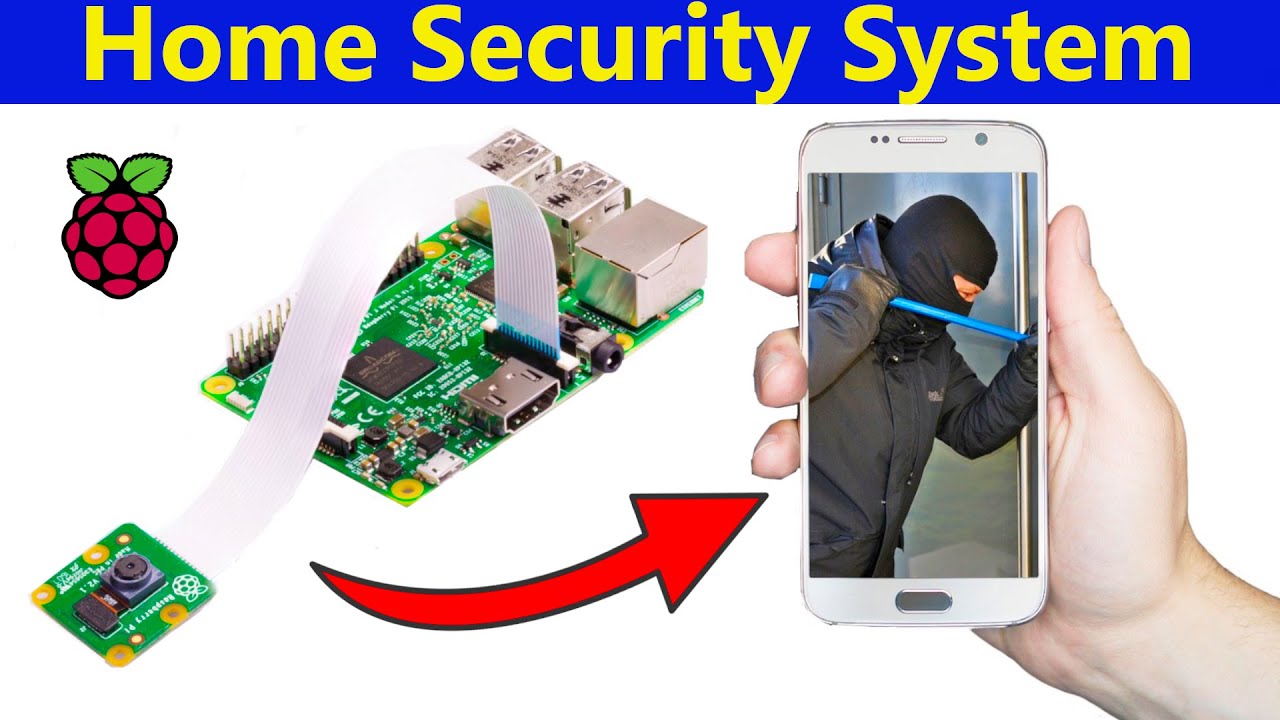
Raspberry Pi Home Security: Building Your Ultimate DIY Surveillance System

Table of Contents
In an increasingly connected world, securing your home has become a paramount concern for many. While commercial security systems offer convenience, they often come with recurring fees and limited customization. Enter the Raspberry Pi Home Security system – an affordable, powerful, and highly customizable solution that empowers you to take control of your property’s safety.
This comprehensive guide delves into everything you need to know about leveraging the versatile Raspberry Pi to create a robust home security setup. We’ll explore its capabilities, outline essential components, walk you through the setup process, and address critical considerations like privacy and advanced features. By the end, you’ll understand why the Raspberry Pi is an excellent choice for DIY enthusiasts seeking a reliable and budget-friendly security solution, establishing your website as an authoritative resource in this niche.
Why Choose Raspberry Pi for Home Security? Unlocking Customization and Affordability
The Raspberry Pi, a series of small, single-board computers, has revolutionized the world of DIY electronics. Its low cost, compact size, and immense processing power make it an ideal candidate for a wide array of projects, including sophisticated home security systems.
Benefits of a Raspberry Pi Home Security System:
- Cost-Effectiveness: Compared to traditional commercial systems that can cost hundreds or thousands upfront, plus monthly subscriptions, a Raspberry Pi setup significantly reduces expenses. You pay for the hardware once, and open-source software is typically free.
- Unparalleled Customization: Unlike closed commercial systems, a Raspberry Pi allows you to tailor every aspect of your security setup. From specific camera types and motion detection algorithms to notification methods and storage solutions, you have complete control.
- No Monthly Fees: Say goodbye to recurring subscription charges for cloud storage or professional monitoring. Your Raspberry Pi system operates independently.
- Open-Source Advantage: Most software used with Raspberry Pi for security is open-source, fostering a community of developers constantly improving features and security, while also providing transparency.
- Learning Opportunity: Building a Raspberry Pi Home Security system is an excellent way to learn about electronics, programming, networking, and cybersecurity – skills that are invaluable in today’s digital age.
- Local Data Storage & Enhanced Privacy: You decide where your footage is stored – locally on an SD card, a connected USB drive, or your own network-attached storage (NAS). This can significantly reduce privacy concerns associated with cloud-based services.
Potential Downsides to Consider:
- Technical Knowledge Required: Setting up a Raspberry Pi security system isn’t plug-and-play. It requires a basic understanding of Linux commands, networking, and troubleshooting.
- Reliability vs. Professional Systems: While highly reliable when configured correctly, a DIY system lacks the professional support, redundant systems, and dedicated monitoring centers that commercial solutions offer. Power outages or internet disruptions can impact its functionality if not properly accounted for.
- Time Investment: Planning, acquiring components, software installation, and configuration can be time-consuming, especially for beginners.
Essential Components for Your Raspberry Pi Home Security System
To build an effective Raspberry Pi Home Security system, you’ll need a combination of hardware and software. Here’s a breakdown of the core components:
Hardware Requirements: The Foundation of Your Security System
- Raspberry Pi Board:
- Raspberry Pi 4 Model B: Recommended for its powerful quad-core processor, ample RAM (2GB, 4GB, or 8GB options), and Gigabit Ethernet, making it ideal for handling multiple camera streams and complex computations like object detection.
- Raspberry Pi 3 Model B+: A capable alternative if budget is a major constraint, though it may struggle with very high-resolution multi-camera setups.
- Raspberry Pi Zero W/2 W: Excellent for single, low-power camera setups where space is limited, but less suitable for a comprehensive multi-camera system.
- Raspberry Pi Camera Module:
- Raspberry Pi Camera Module 3: Offers higher resolution, autofocus, and HDR capabilities for improved image quality in various lighting conditions.
- NoIR Camera Module: (No Infrared filter) Essential for night vision with an IR illuminator.
- CSI Camera: Connects directly to the Pi’s CSI port, offering better performance and lower latency than USB cameras.
- USB Webcams: A viable alternative, especially if you need pan/tilt/zoom (PTZ) features, but may require more processing power from the Pi.
- MicroSD Card: A high-quality (Class 10 or U3) microSD card (minimum 32GB, 64GB+ recommended) for the operating system and temporary storage of footage. Longevity is key, so consider "endurance" cards designed for continuous writing.
- Power Supply: A stable, official Raspberry Pi power supply (e.g., 5.1V 3A USB-C for Pi 4) is crucial for reliable operation. Underpowering can lead to instability.
- Case: Protects your Pi and camera. Consider one with good ventilation and mounting options. Weatherproof cases are necessary for outdoor installations.
- Network Connection:
- Ethernet Cable: For wired, stable connectivity (recommended).
- Wi-Fi: Built-in on most modern Pi models, convenient for flexible placement.
- Optional Hardware for Enhanced Security:
- Passive Infrared (PIR) Motion Sensor: For more accurate motion detection, especially in low-light conditions, reducing false alarms.
- USB Hard Drive/SSD: For long-term, high-volume video storage.
- IR Illuminators: To provide invisible light for night vision cameras.
- Siren/Buzzer: To integrate an audible alarm.
- Door/Window Sensors: For intrusion detection.
Software Options: The Brains of Your Surveillance System
Choosing the right software is critical for the functionality of your Raspberry Pi Home Security system.
- Operating System (OS):
- Raspberry Pi OS (formerly Raspbian): The official, Debian-based OS, providing a solid foundation.
- Security/Surveillance Software:
- MotionEyeOS: (Highly Recommended for beginners) A complete OS image pre-configured for surveillance. It’s user-friendly, features motion detection, email/push notifications, web interface, and support for multiple cameras. It creates an easy-to-manage web interface for live viewing and recording.
- Shinobi: A robust, open-source video surveillance solution that’s more powerful and flexible than MotionEyeOS, supporting advanced features like AI integration for object recognition. It requires more technical setup.
- ZoneMinder: A professional-grade, open-source CCTV software suite. It’s incredibly powerful and feature-rich but has a steeper learning curve and requires more system resources. Ideal for advanced users or larger setups.
- Home Assistant: While primarily a smart home automation hub, Home Assistant can integrate with various cameras and sensors, allowing you to build security automations (e.g., "If motion detected, turn on lights and send notification"). It often works in conjunction with dedicated camera software.
- Custom Python Scripts: For those with programming skills, writing custom Python scripts using libraries like
picameraandOpenCVoffers the ultimate customization for motion detection, facial recognition, and more.
Building Your Raspberry Pi Security System: A Step-by-Step Overview
Setting up your Raspberry Pi Home Security system involves several key steps. While specifics vary depending on your chosen software, the general workflow remains similar.
- Flash the Operating System:
- Download your chosen OS (e.g., MotionEyeOS or Raspberry Pi OS Lite) image.
- Use Raspberry Pi Imager or Etcher to flash the image onto your microSD card.
- Initial Raspberry Pi Setup:
- Insert the microSD card into your Pi.
- Connect the power supply, camera module, and network cable (or configure Wi-Fi headless).
- For Raspberry Pi OS, you’ll need to enable the camera interface via
raspi-config.
- Install & Configure Security Software:
- For MotionEyeOS: It’s largely plug-and-play. Access its web interface via your Pi’s IP address.
- For Raspberry Pi OS + Shinobi/ZoneMinder/Custom Scripts:
- Update your Pi:
sudo apt update && sudo apt upgrade - Install necessary dependencies (e.g.,
ffmpeg,libopencv-dev). - Follow specific installation guides for Shinobi, ZoneMinder, or set up your Python environment.
- Update your Pi:
- Connect and Configure Cameras:
- Add your Raspberry Pi Camera Module or USB webcams within the software’s interface.
- Adjust resolution, frame rate, and video quality settings.
- Set Up Motion Detection:
- Configure motion detection zones to reduce false positives (e.g., exclude swaying trees).
- Adjust sensitivity levels.
- Define actions upon motion detection (e.g., start recording, send notifications).
- Configure Notifications:
- Set up email alerts with attached images/video clips.
- Integrate with messaging services (e.g., Telegram, Pushbullet) for instant notifications.
- Storage Solutions:
- Configure where recordings are saved: microSD card, attached USB drive, or network share (NAS).
- Set up retention policies (e.g., delete footage after X days).
- Enable Remote Access (Securely!):
- VPN: The most secure method. Set up a VPN server on your home network (e.g., OpenVPN, WireGuard on your router or another Pi).
- Port Forwarding (Use with Caution!): Forward a specific port from your router to your Pi’s IP address. This is less secure and should only be done if you understand the risks and have strong authentication in place.
- Cloud Services (e.g., ngrok): For temporary, secure tunnels without port forwarding.
Advanced Features and Customization
The power of Raspberry Pi Home Security truly shines in its capacity for advanced features.
- Facial Recognition: Using libraries like
OpenCVandface_recognition, you can train your system to identify known individuals (family members) and alert you to unknown faces. - Object Detection (AI/ML): Implement AI models (e.g., YOLO, MobileNet SSD) to distinguish between people, animals, vehicles, and other objects, further reducing false alarms and providing more intelligent alerts (e.g., "Person detected at front door").
- Integration with Smart Home Hubs: Connect your Raspberry Pi security system to platforms like Home Assistant, OpenHAB, or Node-RED. This allows for powerful automations:
- "If motion detected at front door after 10 PM, turn on porch lights and lock smart door."
- "Arm security system when the last family member leaves home (via presence detection)."
- Two-Way Audio: Connect a microphone and speaker to your Pi to enable two-way communication through your camera, useful for package deliveries or deterring intruders.
- Tamper Detection: Implement alerts if the camera is obscured or moved.
Addressing Common Questions: Your Raspberry Pi Security FAQs Answered
This section directly addresses questions frequently asked by users considering Raspberry Pi Home Security, enhancing PAA and featured snippet potential.
Can a Raspberry Pi be used for home security?
Yes, absolutely. A Raspberry Pi is a highly capable and cost-effective platform for building a custom home security system. Its small form factor, low power consumption, and versatility make it ideal for surveillance, motion detection, and integrating various sensors. With the right hardware and open-source software, it can function as a comprehensive security camera system, alarm, and even incorporate advanced features like facial recognition.
What are the best software options for Raspberry Pi security cameras?
For beginners, MotionEyeOS is highly recommended due to its ease of setup and user-friendly web interface. For more advanced users seeking greater control and features, Shinobi and ZoneMinder offer robust, professional-grade surveillance capabilities. Alternatively, integrating with Home Assistant allows for powerful automation and centralized control of various smart home security devices.
Is Raspberry Pi surveillance reliable for 24/7 monitoring?
When configured correctly with a stable power supply, a high-quality (endurance-rated) microSD card, and reliable network connectivity, a Raspberry Pi can be remarkably reliable for 24/7 surveillance. However, like any electronic system, it is susceptible to power outages, internet disruptions, or software glitches. For mission-critical applications, consider a UPS (Uninterruptible Power Supply) and robust data backup strategies. Regular maintenance and monitoring are also crucial for ensuring continuous operation.
How much does a DIY Raspberry Pi security system cost?
The cost of a DIY Raspberry Pi Home Security system can vary significantly based on your chosen components and desired features. Typically, a basic setup with a Raspberry Pi 4, camera module, power supply, and microSD card can range from $70 to $150 USD. Adding components like USB hard drives, PIR sensors, or specialized enclosures will increase the cost. Even with advanced features, the total cost rarely exceeds a few hundred dollars, making it significantly cheaper than most commercial systems over time due to the absence of recurring fees.
What are the privacy and security concerns with DIY systems?
While DIY systems offer greater control over your data, they also place the responsibility for security squarely on your shoulders. Key concerns include:
- Network Vulnerabilities: Improperly secured remote access (e.g., unprotected port forwarding) can expose your system to hackers.
- Data Security: If footage is stored locally, physical access to the Pi or storage device could compromise data. Encryption is crucial.
- Software Updates: Neglecting to regularly update your OS and security software can leave you vulnerable to exploits.
- Legal & Ethical Implications: Ensure your surveillance practices comply with local privacy laws, especially if recording public areas or others’ property. Always inform individuals if they are being recorded.
Ensuring Robust Security and Privacy for Your System
Building a powerful security system means little if it’s not itself secure. Here’s how to safeguard your Raspberry Pi Home Security setup:
- Strong Passwords: Change default usernames and passwords immediately. Use complex, unique passwords for your Pi, Wi-Fi, and any remote access services.
- Network Security:
- Firewall: Configure your router’s firewall to block unsolicited incoming connections.
- VPN for Remote Access: As mentioned, a Virtual Private Network (VPN) is the most secure way to access your system remotely. Avoid direct port forwarding if possible.
- Isolate Your IoT Devices: Consider putting your Pi and other IoT devices on a separate VLAN (Virtual Local Area Network) to limit their access to your main home network.
- Regular Updates: Keep your Raspberry Pi OS and all installed software updated to patch security vulnerabilities.
sudo apt updatesudo apt upgrade
- Data Encryption: Encrypt your SD card or USB storage drive to protect recorded footage in case of theft.
- Physical Security: Place your Raspberry Pi in a secure, inconspicuous location to prevent tampering or theft.
- Disable Unused Services: Turn off any services or ports on your Pi that are not actively used (e.g., SSH if not needed).
- Privacy Best Practices:
- Legal Compliance: Understand and adhere to local surveillance laws regarding recording consent and public vs. private spaces.
- Transparency: If recording individuals, consider visible signage.
- Data Retention: Don’t store footage indefinitely. Delete old recordings periodically.
Raspberry Pi Home Security vs. Commercial Systems: A Comparison
Choosing between a DIY Raspberry Pi Home Security system and a commercial solution often comes down to balancing cost, control, and convenience.
| Feature | Raspberry Pi Home Security (DIY) | Commercial Security Systems |
|---|---|---|
| Initial Cost | Low (hardware only, typically $70-$300) | Moderate to High ($200 – $1000s for equipment) |
| Monthly Fees | None (unless for specific cloud services or VPN) | Common for monitoring, cloud storage, app features ($10-$60+) |
| Customization | Extremely High (full control over hardware & software) | Limited (vendor-locked ecosystems) |
| Technical Skill | High (requires Linux, networking, configuration knowledge) | Low (plug-and-play, guided setup) |
| Features | Basic to Advanced (motion, alerts, AI, facial recognition) | Comprehensive packages (professional monitoring, smart home integration) |
| Reliability | Good (if properly configured and maintained) | Excellent (professional support, redundant systems) |
| Privacy Control | High (local storage, direct data ownership) | Varies (often cloud-based storage, vendor data policies) |
| Support | Community forums, online documentation | Dedicated customer service, professional installation/repair |
| Scalability | Good (add more cameras, sensors, expand storage) | Often limited by system architecture, sometimes costly to expand |
For those who value control, learning, and long-term savings, the Raspberry Pi is an unmatched choice. If ease of use, professional monitoring, and hands-off maintenance are priorities, a commercial system might be more suitable.
The Future of DIY Home Security with Raspberry Pi
The landscape of DIY home security is constantly evolving, and the Raspberry Pi remains at its forefront. Advances in edge AI and machine learning will make sophisticated features like advanced object recognition and predictive analytics more accessible on these small devices. Integration with emerging IoT standards will further streamline the process of building interconnected security ecosystems. As the Raspberry Pi community continues to innovate, expect even more user-friendly software and powerful capabilities to emerge, making Raspberry Pi Home Security an even more compelling option for the average homeowner.
Conclusion: Empowering Your Home Security with Raspberry Pi
Building a Raspberry Pi Home Security system is a rewarding endeavor that offers unparalleled control, flexibility, and significant cost savings. While it requires a degree of technical curiosity and a willingness to learn, the benefits of a truly customized and privacy-respecting security solution are immense.
From basic motion-activated cameras to advanced AI-powered surveillance with facial recognition, the Raspberry Pi empowers you to design a security system perfectly tailored to your needs. By following the guidelines in this article – from selecting the right components to implementing robust security measures – you can transform a small single-board computer into a powerful guardian for your home.
Take the leap, embrace the world of DIY, and secure your peace of mind with a Raspberry Pi. Your home’s safety is literally in your hands.
References & Further Reading:
- Official Raspberry Pi Documentation
- MotionEyeOS GitHub Repository
- Shinobi Systems Official Website
- ZoneMinder Official Website
- NIST Cybersecurity Framework (For general cybersecurity best practices)